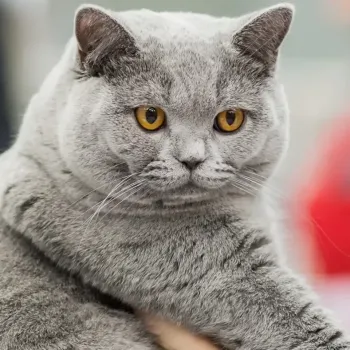
The British Shorthair is a breed recognised by FIFe and WCF (Category III in FIFe, code BSH). Originating from Great Britain, it was shown at exhibitions during the turn of the 19th and 20th centuries. This breed is distinguished by its sturdy, muscular build and calm, gentle temperament. Its short, densely packed coat makes it a practical companion for domestic life.
The British Shorthair originates from Great Britain. The breed was exhibited at shows held at Crystal Palace at the turn of the 19th and 20th centuries. During this same period, the first specimens were exported to the United States.
The British Shorthair is a medium to large-sized cat, muscularly built with a compact cobby frame. It displays a broad chest, well-developed shoulders and back. The legs are of medium length, muscular and topped with thick, rounded paws. The neck is short and powerful, supporting a massive, round head with a broad structure and strong chin. The cheeks are full, the nose short, wide and straight. The profile is rounded without a stop.
The breed encompasses a rich palette of colours. Solid colours include white, black, blue, red, cream, chocolate and lilac. Shaded and chinchilla patterns are available in silver and gold varieties, along with smoke and tabby patterns in classic, mackerel and spotted variants. Tortoiseshell, blue-cream and calico are permitted, as well as bicolours and white-combined varieties including smoke and tabby with white. Cinnamon and fawn in the AOV group are also recognised.
The British Shorthair is a calm and quiet cat. It is characterised by loyalty to its owners, affection and self-assurance. In handling, it proves gentle and composed, with a temperament marked by patience and intelligence. It combines the ability to be a true companion with a calm and gentle nature.
The coat is short and very densely packed, firm to the touch.
The British Shorthair is generally regarded as a healthy breed. Any health concerns should be discussed with a veterinary surgeon.
| Organisation | Recognised | Breed code | Category |
|---|---|---|---|
| FIFe | yes | BSH | III |
| WCF | yes | BRI | — |
- Is this breed internationally recognised?
- The British Shorthair is recognised by FIFe (Category III, code BSH) and WCF (code BRI). In the WCF system, the code BSH refers to a different breed.
- What is the build of this cat?
- It is a medium to large-sized cat, muscularly constructed with a compact cobby frame. It is distinguished by a broad chest, muscular legs and a massive round head with full cheeks.
- Where does this breed originate?
- The British Shorthair originates from Great Britain. It was exhibited at shows at Crystal Palace at the turn of the 19th and 20th centuries and was subsequently exported to the United States.
- What coat colours are permitted?
- The breed allows solid colours, shaded, chinchilla, smoke, tabby, tortoiseshell, calico and bicolour patterns. White-combined varieties and cinnamon and fawn are also accepted.
- What is the temperament of this breed?
- This is a calm, quiet cat that is loyal to its family. In handling it is gentle, composed, patient and intelligent.